 IndianZ Xpress NZ's first and only Hindi news website

– Alok Gupta :
From the fearless dressing rooms of Shastri and Dravid to a period of uncertainty, questionable selections and alarming Test performances, Indian cricket needs to ask some uncomfortable questions.
Indian cricket has never been short of great players, great captains or strong personalities. But there is one fundamental principle that has sustained the game through generations: no individual is bigger than Indian cricket. Not even its head coach.
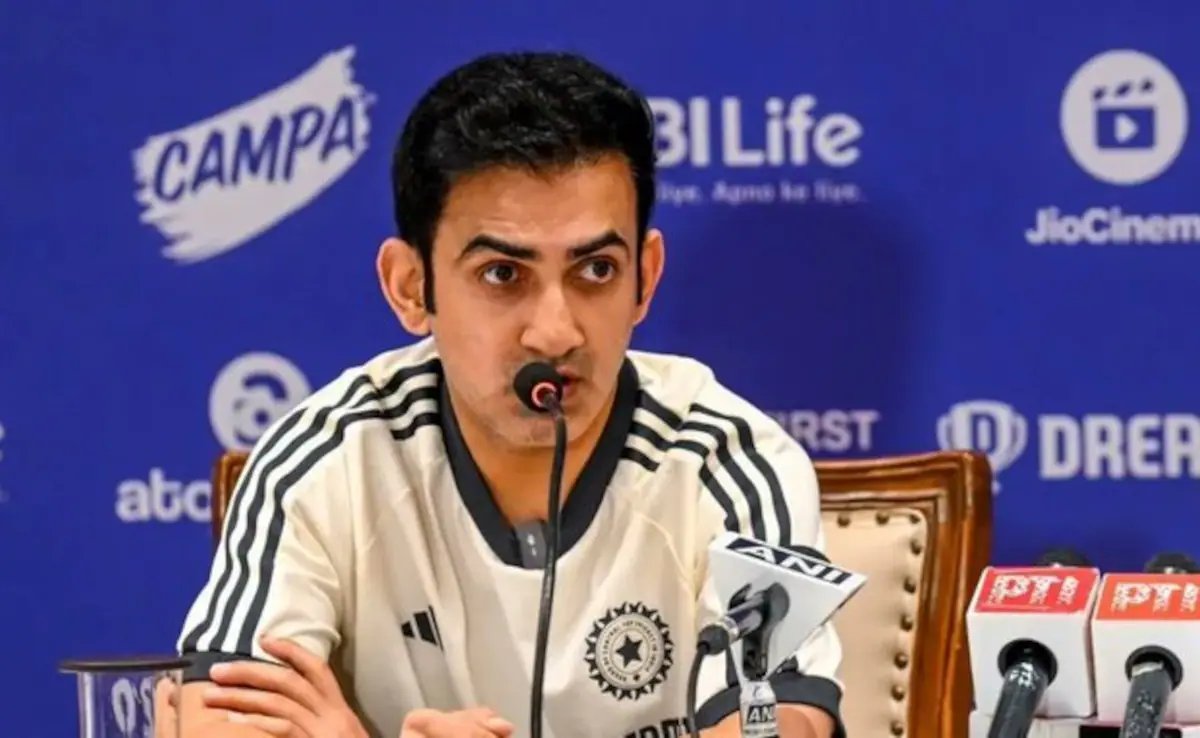
Unfortunately, under Gautam Gambhir, there is an increasing feeling that the man entrusted with taking Indian cricket forward has become a source of more questions than answers.
Gambhir was appointed India’s head coach in July 2024 with considerable expectations. His aggressive temperament, competitive instincts and impressive record with Kolkata Knight Riders suggested that he could bring a new dimension to the national team. However, what has followed, particularly in Test cricket, has been deeply concerning.
The question is no longer simply whether Gambhir is getting his selections right. It is whether his overall approach to managing Indian cricket is taking the team backwards.
A Record That Cannot Be Brushed Aside
Let us look at the results.
India’s 0-2 ODI series defeat against Sri Lanka in August 2024 was an early warning. Then came something almost unthinkable: New Zealand whitewashed India 3-0 on home soil in October-November 2024, ending India’s remarkable 12-year unbeaten home Test series record.
The humiliation did not end there. India subsequently surrendered the Border-Gavaskar Trophy in Australia, losing 3-1. New Zealand also went on to record a historic ODI series victory in India in January 2026.
These are not ordinary setbacks. They represent a worrying decline in performances across formats, particularly in the longest version of the game.
Yes, India have won the Champions Trophy, the Asia Cup and the T20 World Cup during Gambhir’s tenure. Those achievements deserve recognition. But white-ball trophies cannot become a permanent shield against legitimate questions about the deterioration of India’s Test cricket.
Has the Dressing Room Lost Its Freedom?
One of the most important responsibilities of a national coach is to create an environment in which players feel confident, respected and free to express themselves.
A dressing room should be a place where players can disagree, question decisions, discuss strategies and even challenge the coach’s thinking without fear of consequences.
There have been persistent discussions and reports about tensions within the Indian camp and Gambhir’s demanding management style. While allegations of a fearful dressing-room atmosphere should not be treated as established facts without evidence, the very perception of an environment in which players hesitate to speak openly deserves serious attention.
A coach’s authority should come from respect, not apprehension.
India’s most successful teams have always had strong personalities. A coach must know how to manage them, not suppress them. Cricket is a team sport, not a one-man administration.
The Selection Mystery: Where Is the Logic?
Perhaps the most frustrating aspect of Gambhir’s tenure has been the apparent inconsistency in selection and team combinations.
Take Kuldeep Yadav. Here is a world-class wrist-spinner capable of changing matches with his wicket-taking ability. Yet his exclusion from India’s playing XI during the five-Test England series in 2025 raised serious questions. Gambhir himself acknowledged how difficult it was to tell players of Kuldeep’s quality that they would not be playing.
Similarly, Mohammed Shami’s fitness and availability have been recurring talking points. A bowler of his experience, quality and ability to deliver in crucial matches deserves clarity about his role and future rather than uncertainty.
And then there is the extraordinary excitement surrounding young Vaibhav Suryavanshi. His explosive batting has captured the imagination of cricket lovers. Nobody should demand that a young player be rushed into international cricket, but India’s approach to identifying, nurturing and giving opportunities to exceptional talent must be transparent and consistent.
Selection cannot become an exercise in personal preference. It must be based on performance, conditions, team requirements and a clearly communicated cricketing vision.
The Kohli and Rohit Chapter: An Era Deserved Better
Perhaps the most emotionally significant development was the departure of Virat Kohli and Rohit Sharma from Test cricket in May 2025.
Both announced their retirements, and it would be unfair to claim that Gambhir personally forced them out. Nevertheless, the transition raised important questions about India’s handling of two of its greatest modern-day cricketers.
Kohli transformed India’s Test culture, particularly its approach to fitness, aggression and overseas competition. Rohit brought his own leadership qualities and batting excellence to the team.
Players of their stature deserve enormous respect, particularly when their careers approach their conclusion.
Moving towards a younger generation is inevitable. But rebuilding a team should never mean losing the wisdom, experience and leadership of its senior players without a convincing succession strategy.
What Happened to the Shastri-Dravid Legacy?
Ravi Shastri and Rahul Dravid brought different personalities and coaching philosophies, but both presided over teams that established India as a formidable force in international cricket.
Under Shastri, India won historic Test series in Australia and developed an extraordinary fast-bowling culture. Under Dravid, India continued to build on that foundation, reached the 2023 ODI World Cup final and won the 2024 T20 World Cup.
Their work was not perfect, but they left behind a strong cricketing structure, a competitive team and a culture of accountability.
The concern is that much of that hard-earned confidence, particularly in Test cricket, has been squandered.
Indian Cricket Is Bigger Than Gautam Gambhir
Gambhir deserves credit for his achievements as a player and for the trophies India have won under his coaching. But past achievements, whether as a player or coach, cannot guarantee permanent authority.
The BCCI must look beyond personalities and examine performances, dressing-room culture, selection policies and the direction of the national team.
A great coach makes players better. An exceptional coach makes the entire team believe it can win, regardless of the opposition or conditions.
Indian cricket needs a coach who can command respect without demanding unquestioning obedience, develop young talent without sidelining proven match-winners, and build a team in which every player knows that merit matters.
Gautam Gambhir has been entrusted with one of the most prestigious jobs in world cricket. He must recognise that this responsibility is bigger than his individual philosophy, temperament or ambitions.
Indian cricket does not belong to its coach, its captain or even its biggest superstar. It belongs to the millions who love the game.
And those millions have every right to ask: is the current direction taking Indian cricket forward, or are we undoing years of hard-earned progress?
The answer must come not from press conferences or promises, but from performances on the cricket field.